Many vendors are to be at The Irish Fair of Minnesota. One in particular is the Patsy O’Brien.
About Patsy O’Brien
Patsy O’Brien is a Irish Guitar. Patsy has toured extensively with Eileen Ivers, Paddy, Keenan, Cathie Ryan, Teada and numerous other ensembles, as well as touring as a solo act performing from his solo recordings. Patsy also hosts guitar workshops around the US, with the emphasis on guitar playing in Traditional Irish music. These workshops have meet with great success and continue to grow. His song “Sacco and Vanzettti (Rise and Unite)” won Best Songwriting Award from the CT Folk Alliance in 2003.
Event Schedule
Tuesday July 1, 9:00: Todd Menton
Wed July 2, 7:00: Pete McCauley
thy July 3, 5:00: Acoustic Happy Hour-Nikki & Rich Roux
I have a Collie. In his mind, all the kids in my backyard must stay together. When one wanders off he barks to herd them back together. He’s a herding dog by nature.
While my kids are used to Laddie, the neighbor kids don’t always appreciate being treated like wandering sheep.
Every year the kids beg to take Laddie to the Irish Fair of Minnesota to see if he can herd sheep as well as the professional dogs.
Every year I say, “No.” quickly followed by “Let’s go to the Irish Fair of Minnesota and watch the professional dogs.”
A Fair Favorite
We plan our visit to the Irish Fair of Minnesota to make sure we catch a bit of sheep herding. Luckily the sheep perform a few times during the fair because it’s a popular event for many families.
Escape Artists
Last year a few sheep escaped — it must have been a new dog — but I couldn’t figure out how they got past the crowd of kids and families surrounding Croagh Park. Of course, if I had a wee sheep running toward me, I might move out of the way pretty quickly, too. All six of the escape artists were quickly corralled with a little help from fairgoers.
Sheep Herding is an Art
With only a few commands from a shepherd, a well-trained dog can easily manage a herd of sheep.
Depending upon who you ask, St. Paul, MN is very Irish– about 7% today (per the Census Bureau) but the second most populous ethnic group in the 1850s. Regardless of the statistics, Irish culture plays a big part of the St. Paul culture:
The Celtic Junction weaves the traditions of Dance, Music, Art & Language according to its website. Tucked a few blocks north of Menards (and University Avenue) on Prior Avenue, the Celtic Junction provides space for all these traditions:
The Celtic Junction was created to celebrate and nurture thriving Celtic Arts by supporting local artists and facilitating the education of those arts to the local community. The Twin Cities Metro Area has a great wealth of talented musicians and performers, mastering such arts as:
Irish Step Dance, Ceili Dance & Set Dance
Traditional Irish & Scottish Music
Gaelic Language, Literature and Studies
Visual Arts & Instrument Making
The Celtic Junction wishes to bring these (and many other) traditions together under one roof and to provide a home where our community can thrive and grow together.
Sponsoring the Irish Fair of Minnesota
The Celtic Junction and the Irish Fair of Minnesota are natural colleagues — the Irish Fair even offices in the Celtic Junction. Sponsorship — when one brand sponsors another — give both of them wider exposure.
“Sponsorship is a mutually beneficial relationship between two organisations, a rights owner such as a sports club, and a fund provider — the business,” explains Jackie Fast, sponsorship manager and managing director at Slingshot Sponsorship.
“While the rights owner usually benefits from goods, services or funding provided by the business, the funder can benefit in myriad ways,” she adds. “The return on investment won’t always translate directly into pounds. But while measuring increased sales is important, benefits such as brand awareness, showcasing opportunities, customer loyalty, lead generation and goodwill, all need to be considered too.”
Sponsorship can generate substantial publicity for a relatively small investment. “It’s like using the strength, funds and audiences of two organizations to develop your product and build your brand awareness,” says Fast.
For every young girl and boy that becomes enamored with Irish Dancing or playing a fiddle at the Irish Fair of Minnesota each August; there is a parent wondering how to nurture that passion. The Celtic Junction is that resource for classes, shows, and general Irish cultural.
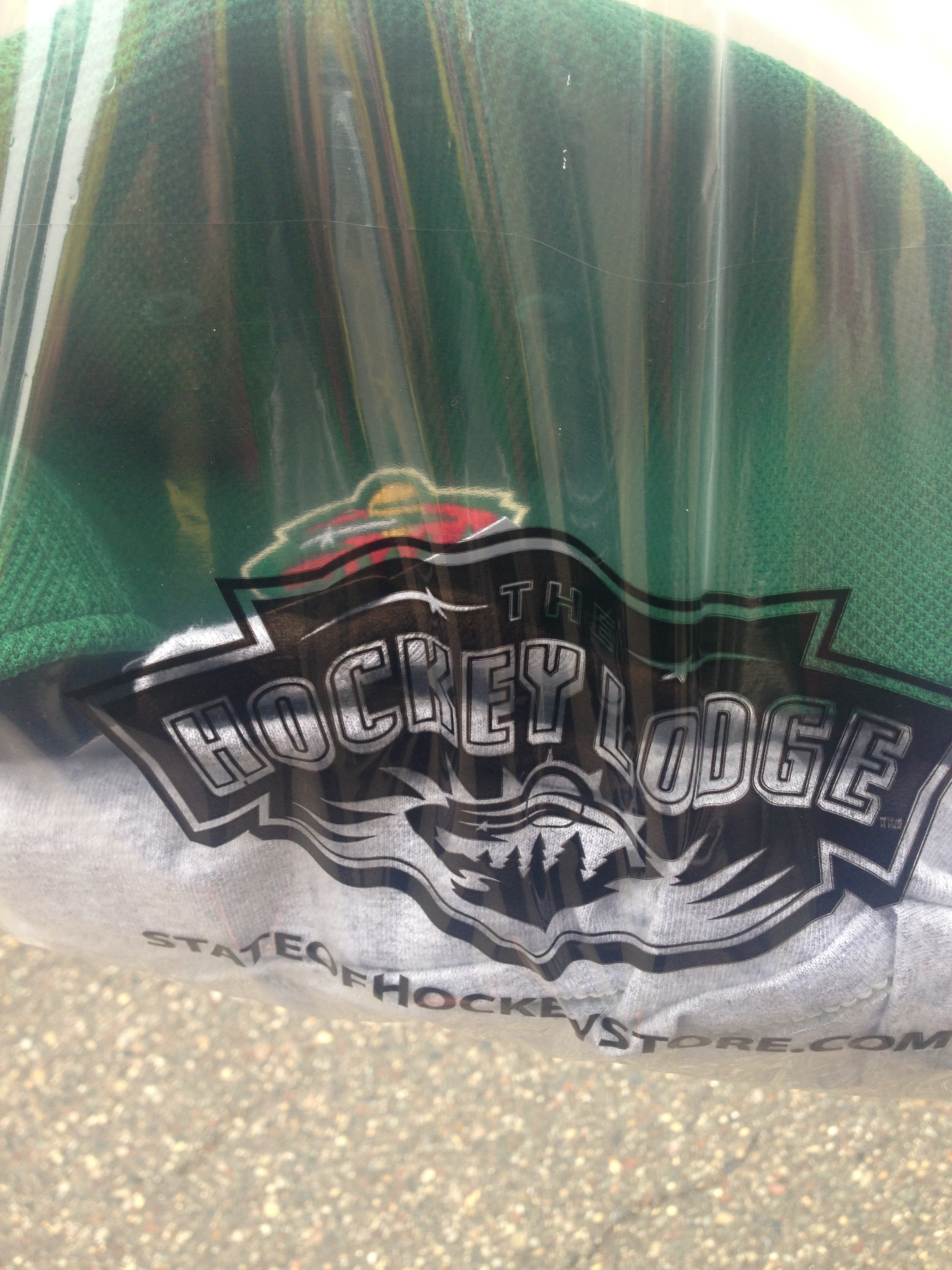
I had $2, mostly in quarters in my pocket as I biked past the Minnesota Wild merchandise booth at Grand Old Day.
T-shirts and hats for $10.
Eight quarters wasn’t going to help, but my debit card did.
How many Grand Old Day merchants missed out on sales because they only accepted cash?
It’s well known that consumers spend less when they use cash. In a land of food trucks, pop up shops, and licensed peddlers, why would any small business limit their sales to patrons with cash in hand?
Square and Mobile Payments
Forbe’s reported last year that there are many mobile payment options besides the well-known, Square:
Many small merchants, from food truck vendors to hair stylists, use mobile payments to process their transactions. They’re convenient, simple and often come with handy features like receipt delivery and reports. But should small businesses always turn to the first processor they see? Even though companies like Square and PayPal Here dominate the conversation, they’re not always the best choice.
With options like these, small businesses (and non-profits) need to wisely manage payment options.
Kudos to the Minnesota Wild
One – for taking debit cards along side Grand Avenue
The question should really be, what skills do I need?
For me, it’s how should I prepare my students? They need to understand social strategy, to measure sentiment, create a visual experience, and analyze like an economist — and write really well, too.
The intersection of technology and marketing will be a rich breeding ground for jobs in the marketing field in 2013, industry insiders say. “We expect to make 150 to 200 hires just in Chicago over the next few years,” says Butler. In addition to specialists in core marketing disciplines, Roundarch will be looking for media strategists, user experience designers, Web developers, Java developers and content managers.
Professionals who haven’t fully immersed themselves in the new media of marketing will likely feel less in demand in 2013. “Multichannel user experience people are the hardest to find, then mobile, while the market for creative and visual design folks is a little bit softer,” Butler says. Roundarch’s recent job postings have included SEO technical strategist, user experience director and project manager.
In fact, marketing professionals may have no choice but to get involved in digital if they want to have a future in their field. “The lines between digital and traditional media planning are blurring,” says Christine Stack, director of senior talent acquisition at MEC, a media buying agency with about 4,400 workers worldwide. “We now need strategic media planners who work across all media.” MEC has recently posted openings for senior associate of digital media, senior director of media planning and manager of marketing-mix modeling.
Marketing analytics will also be a very active area for hiring in 2013. “More employers are looking for marketers who have the potential to work with ‘big data,’” says Larry Chiagouris, a professor of marketing at Pace University in New York City and author of The Secret to Getting a Job After College: Marketing Tactics to Turn Degrees into Dollars. “They’re looking for people who can make sense of user-generated content, online ratings and so on.”
But in addition to technical savvy, marketing firms and in-house departments say they are hard-pressed to find folks skilled in the very essence of the field: communication. “Economics majors are sought out by marketers if they can communicate,” Chiagouris says. “Marketing people are in demand if they can do analytical work.”
I always knew my economics degree would serve me well.
My Integrated Marketing Communications class writes an almost-weekly marketing communications blog. My goals are to teach the blogging medium and business writing skills. I promised to write 500 words with them every week. Here’s my first post. The topic is my favorite thing.
I assign this topic to have my students market it across the IMC spectrum. Today they’ve created a content marketing piece for it in WordPress and will personally sell their item in class. Later in the semester we will create print mock ups and prescribe the magazine choice, ad size, and location within the journal. By the end of class, we’ve fully explored all aspects of IMC in the metaphor of a small, personal object. The word of mouth is incredibly powerful.
The only rule it that the item must be portable and something they could actually sell. Handmade objects are difficult, so I advise they choose something they know intimately. I want to hear about why this object is truly a favorite thing.
It’s not the shiny case that attracted me, although it does possess an 80s glamour. My brow artist who works wonders with my prolific eyebrows sells the Julie Hewitt line in her shop. I’ve always used my hometown brand, Aveda, because I like it’s minty-ness and sustainable packaging. In many years I’ve never thought of changing brands. I am Aveda loyal.
However…the colors change and I’ve had more than one Juut make up artist suggest a truly ugly color for me. Ugly, like coral orange. It’s not that coral is an ugly color, but with my skin tone it looks awful.
Julie Hewitt sells gorgeous blue-tinted reds and pinks. I have exactly three shades: Femme Noir (pictured above to the left), Sin Noir (not for class) and my go to favorite, Scarlett.
Why I love this lipstick
First of all, I love color. I consider red, purple, and fuchsia almost as wardrobe neutrals. I wear brown and black, as well, but I also wear something colorful. My purses are black or bright. My hats are the same.
I often match my lipstick to what I’m wearing. My red and white herringbone “statement” jacket matches my Julie Hewitt Femme Noir lipstick perfectly. I don’t wear a lot of makeup — usually just tinted sunscreen and lipstick, maybe a little eye liner now and again.
I don’t wear much eye makeup because I have wild eyebrows. Well, they would be if I didn’t seek professional help from Brow Chic. My eyebrows are my true vanity. Having grown up in the era of Brooke Shields full brows, my almost Freda Kahlo-esque brows were very stylish in the 80s…
The unibrow is not in style. I really don’t think it ever was. Thinking positively, having full brows means my eyebrow stylist can shape them easily without requiring me to fill them in with additional color. I trust her judgement implicitly.
My stylist recommended Julie Hewitt. I was hooked ever since..
When the hair in your nose instantly congeals and bubbles freeze on bushes; it’s cold. “What are you doing blowing bubbles, if it’s that cold?” I hear you asking. When it is that cold, we cancel school and invent science experiments to pass the time—bubbles do freeze quickly; boiling water does not. Old timers and people with money always mention that they made it to school just fine when they were kids. “Today’s kids are too soft,” they say. “Anyone could be warm if they had a coat, mittens, long underwear, a hat, and snow pants,” I say. Lots of kids don’t have Rubbermaid buckets of seasonal clothing like I do. Maybe their parents don’t know any better, maybe they just choose other things like rent and food vs. extreme weather clothing. Let’s just agree then, that -20 Fahrenheit is cold. We all approach weather from our own perspective–no unlearning necessary here.
Twenty degrees above zero feels like a heat wave after even an hour of 20 below. Unfortunately we don’t just get an hour of -20, we get 72 hours of it. Then we start looking at records, “Back in 1977 we had 72 days of….” The stories quickly build. I was kid back then, it wasn’t that cold. Twenty degrees above zero brings old men out in shorts and teenagers skating in t-shirts. That’s ice-skating. Outside. Still, I must admit it feels great to take a deep, humid breath outside without my lungs constricting.
I know cold. I know the nuances of layering, of down vs. Polartec, of when to give in and avoid frostbite. I thought I knew heat, but I was wrong.
We never used the wondrous central air conditioning of my childhood. According to my parents it was never that warm. I always figured the light summer air felt good after a day cooped up in overly cooled medical offices. Decades later, I realized their definition of hot came from years in Georgia, Tennessee, and Florida. They were Northerners, but time in the South colored their perception.
Mine too.
It took decades for me to learn the difference between very warm and hot because that’s when I moved to The South. Eighty degrees where I live today, is sweltering. Air conditioners drone abysmally in July and August. Schools close to prevent heat exhaustion. Four summers in Chapel Hill, North Carolina taught me the rough differences between the simple warmth of 85, the invitation to swim of 92, and the hell of 98 and humid. I needed more time to develop the finesse of knowing when school would close due to the threat of snow, but I was tired of melting.
My neighbors today–those tough Northerners who embrace epic wind chills shake their heads in confusion at my open windows all summer long. I hate air conditioning. I still don’t go swimming unless it’s 92. It’s got to be at least very warm before I risk a toe in an outdoor pool.
Weather, like politics is contextual. Until you change your latitude, to quote Jimmy Buffet, you can’t unlearn your sense of hot and cold.
This essay was written for Cathy Davidson’s Coursera course, History and Future of (Mostly) Higher Education. And it was due an hour ago…
Butterflies descend from my ceiling, my drapery wires, on the woodwork, and from my indoor Norfolk Pine tree? Why? It’s too cold for a Minnesotan like me to go outside. If it were 70 and sunny everyday, my office would still be half painted, the butterflies would still be in their boxes, and my creative strategy syllabus would be farther from completion.
Extreme winters make us creative.
1. We’ll hear some amazing music over the next few months as Minnesotan musicians get creative with the cold. See today’s local Current blog for a complete list.
2. My office is gorgeous now.
3. Pasta Fazool, Pulled Pork (North Carolina style), Tomato Bisque soup, and Cream of (Minnesota) Wild Rice soup for the spontaneous neighborhood potluck. I can’t remember the last time I cooked anything that required 4+ hours of stock simmering.
4. Rotating hordes of school kids building forts in each other’s living rooms. All my massive dictionaries make wonderful blanket weights, after all.
5. Freezing stuff — bubble bushes and ice globes.
Photo courtesy of Mary Kate Boylan
6. Minnesotans always, always, always will have something non-political to talk about.
7. Every Christmas present is thoroughly played with. Every board game’s rules rewritten.
8. An extraordinary vocabulary to describe one simple word: cold.
9. October 2014 babies. Sorry, I couldn’t resist.
10. Emerald Ash Borer, R.I.P.
Now that you’re ready to move to Minnesota and be creative, you need to know these 10 tips from @mplsgossipgirl
It’s cold out there today. Really cold. Like -22 degrees and it feels like -45 with the windchill.
If you are a true Minnesotan you go outside and think, Oh, this really isn’t that bad. It’s cold, but it could be worse.
There are a few reasons why we stay here when it is this cold outside. We are smart enough to figure out how to keep warm in this polar vortex.
10 Reasons Why -22 Degrees is Not That Cold When You Are a True Minnesotan:
1. You own all the proper winter weather gear. This may include a parka,mukluks, a hat with ear flaps, and proper mittens. You don’ t care what you look like because at least you are warm.
2. You own at least 3 pairs of long underwear. Yes, you may look a little bit puffy today at work but your bum is nice and toasty.
3. You have a space heater at your desk. Did your feet get cold on your way into work? That is not a problem because when you get to work you can put them right in front of your space heater.
4. Almost everyone knows how to jump a car or knows someone who can jump their car and can do it in 2 minutes. We carry around the tools to get our cars started no matter where we are because it is the smart thing to do.
5. We all own at least 40 blankets. One of them is heated so that if it gets really cold we can plug it in and be nice and toasty when we sleep.
6. If you have something warm to drink it makes you think that you are really warm. We all have supplies of hot coco, tea, and coffee to make when it gets frigid. Your mom also used to put in those little marshmallows when you were younger.
7. When there are days like this we have a supply of movies, games, and indoor activities that keep us occupied for many hours. Plus, we may even get to sleep in.
8. We all know alternative (less safe) ways to heat our homes by using space heaters, cooking something in your oven, and lighting candles. You usually end up with a hot dish or a pot roast, it’s a win/win.
9. It gives us an excuse to cuddle up with those people you love. Body heat helps.
10. We know it’s not THAT cold because it could always be worse. It could be -40 degrees and it feels like -70 and it snowed 3 feet overnight and then it sleeted for that very brief warm up. IT CAN ALWAYS BE WORSE.
Lets be honest, we love it here in Minnesota, even when it is colder than Antarctica which is only at -11 degrees today. We stay because of the people, the culture, the food, the community, and because summer is amazing here.







 Sara Kerr